Elegir bien
Qué altura de césped artificial elegir según el uso
Guía rápida por escenarios: de los 20 mm de una terraza a los 50 mm de un jardín decorativo, con el porqué de cada rango.
29 August 2026 · 3 min read
Before you decide
Measure each area, add them up and include the recommended 10% allowance for cuts and joins. The calculator does this for you and tells you which models suit your case.
Calculate my square metresTo decide with judgement
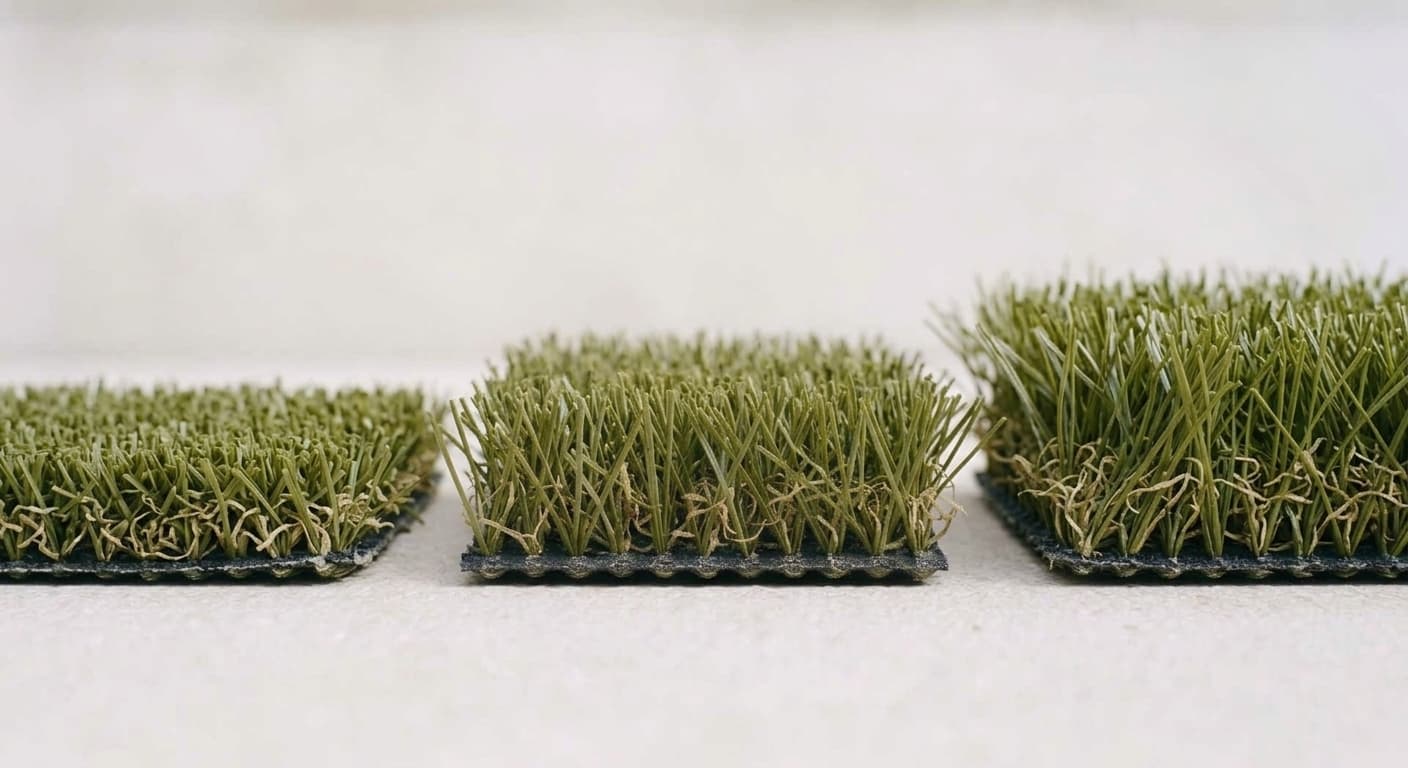
Between 20 and 30 mm. On a small surface, extra pile height doesn't add realism and does complicate maintenance. Weight matters more — between 1.6 and 2.1 kg/m² versus 2.9 kg/m² for a tall-pile grass — because a roof terrace may have a load limit, as does drainage, since the water can't filter into the ground.
Yes, and it's the simplest kind of installation. All you need is to clean the surface thoroughly, remove moss and any grease, and check that water drains away properly. If the ground is very hard and you want more comfort underfoot, a foam cushioning underlay of around 10 mm can be added.
Yes, more than natural grass: in high summer and in direct sun, a dark-coloured grass can go above 55°C in surface temperature. Olive-toned shades and cooling-fibre technology narrow the gap. A quick hose-down brings the temperature straight down, and a shade sail solves the problem on very exposed terraces.
If it's fixed properly, yes. The weak point is the corners and the perimeter: on roof terraces and exposed terraces it's worth reinforcing the fixing all round the edge and, if drilling isn't possible, using a continuous bead of perimeter adhesive or weighing it down with silica sand.
On terraces for your own private use, usually yes, provided the waterproofing and structure aren't altered and the building's exterior appearance isn't changed. It's worth checking the community's bylaws and, if in doubt, notifying the property management company in writing before installing.
Elegir bien
Guía rápida por escenarios: de los 20 mm de una terraza a los 50 mm de un jardín decorativo, con el porqué de cada rango.
29 August 2026 · 3 min read
Instalación
La técnica detrás del procedimiento: por qué la base se compacta buscando estabilidad y no impermeabilidad, qué cambia según la superficie, por qué una junta se ve y qué no tiene arreglo después.
12 August 2026 · 5 min read
A terrace is laid on hard flooring —tiles, concrete or a waterproof membrane— so there's no soil to absorb anything and the water has to reach the drain. It's also a surface that gets a lot of footfall in a small space and that gets hours of direct sun in summer.
Models
2
Pile height
30–35 mm
Guarantee
up to 10 years
Between 20 and 35 mm recovers better from continuous footfall. A tall fibre in a small area flattens in the high-traffic zones and shows straight away.
The grass is laid following the existing slope. Blocking a drain is the most expensive mistake on a terrace.
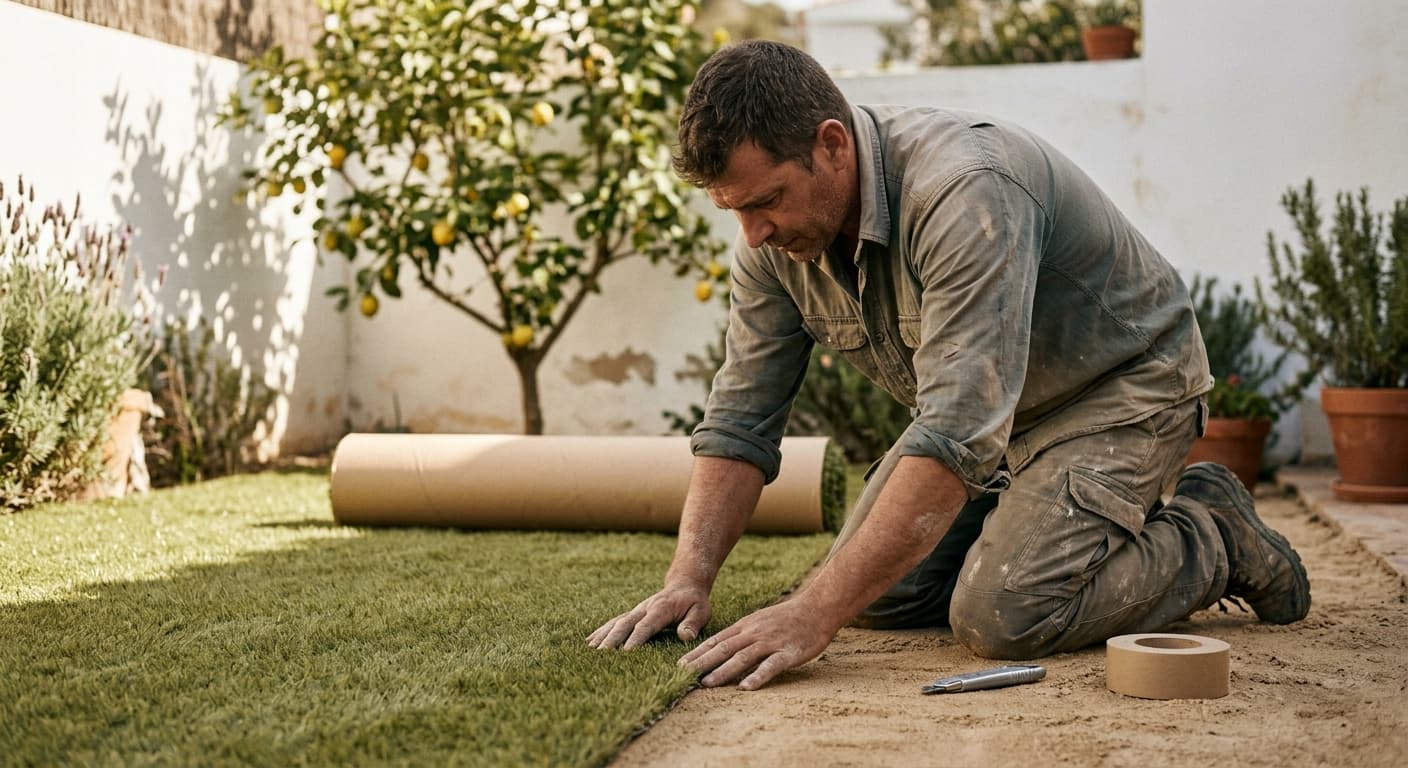
On hard flooring it isn't nailed down: it's fixed with adhesive along the perimeter and at the joins, or left loose-laid if the surface is small and regular.
Hard flooring builds up heat. Lighter tones and lower-density fibres heat up less in the midday sun.
2 products
Cada fibra de este césped ha sido cuidadosamente diseñada para proporcionar una suavidad excepcional, imitando la sensación de la hierba natural al ser un césped MULTIDIRECCIONAL.
Combinación perfecta de recuperación y suavidad. Césped excepcional, gracias a la tecnología avanzada del hilo RPLUS-SUPERIOR. Con tres tonalidades de verde, este césped es ideal para todo tipo de jardines. Ya sea en un entorno residencial o comercial, ofrece una estética atractiva y un rendimiento duradero.