Mantenimiento
Cómo limpiar y mantener el césped artificial
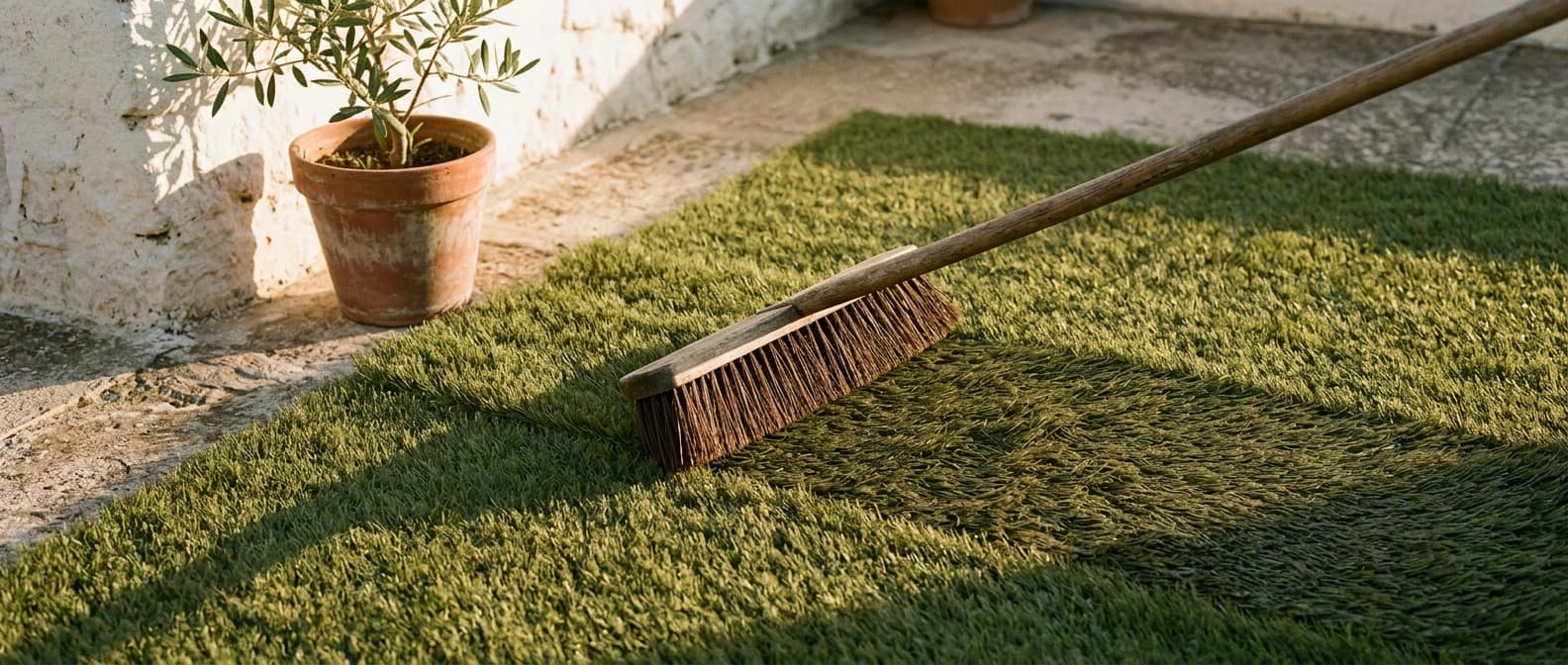
Rutina realista de mantenimiento, qué productos usar y cuáles no, y cómo resolver manchas, musgo y olores.
22 August 2026 · 3 min read
Before you decide
Measure each area, add them up and include the recommended 10% allowance for cuts and joins. The calculator does this for you and tells you which models suit your case.
Calculate my square metresTo decide with judgement
Cats get on well with artificial grass and don't usually dig like dogs do. The only downside is that some use it as a litter tray; it's solved by keeping an appealing litter tray nearby and rinsing the affected area.
With normal use, no. The fibre is inserted into and fixed onto the backing, so claws slide off instead of catching the way they would on a scratching post. Where it can cause damage is a loose edge or a badly glued joint, which a persistent cat can eventually lift. Finishing the perimeter properly and leaving a scratching post nearby solves almost every case.
It can smell sooner than with dog urine, because cat urine is more concentrated. With high drainage it doesn't stay trapped, but it's worth rinsing thoroughly with water as soon as you spot the area and applying an enzyme-based cleaner, which breaks down the residue causing the smell instead of just masking it. If the cat keeps going in the same spot, the usual culprit is the litter tray: not clean enough, or badly placed.
Between 20 and 30 mm. On a small surface, extra pile height doesn't add realism and does complicate maintenance. Weight matters more — between 1.6 and 2.1 kg/m² versus 2.9 kg/m² for a tall-pile grass — because a roof terrace may have a load limit, as does drainage, since the water can't filter into the ground.
Yes, more than natural grass: in high summer and in direct sun, a dark-coloured grass can go above 55°C in surface temperature. Olive-toned shades and cooling-fibre technology narrow the gap. A quick hose-down brings the temperature straight down, and a shade sail solves the problem on very exposed terraces.
Mantenimiento
Rutina realista de mantenimiento, qué productos usar y cuáles no, y cómo resolver manchas, musgo y olores.
22 August 2026 · 3 min read
Mantenimiento
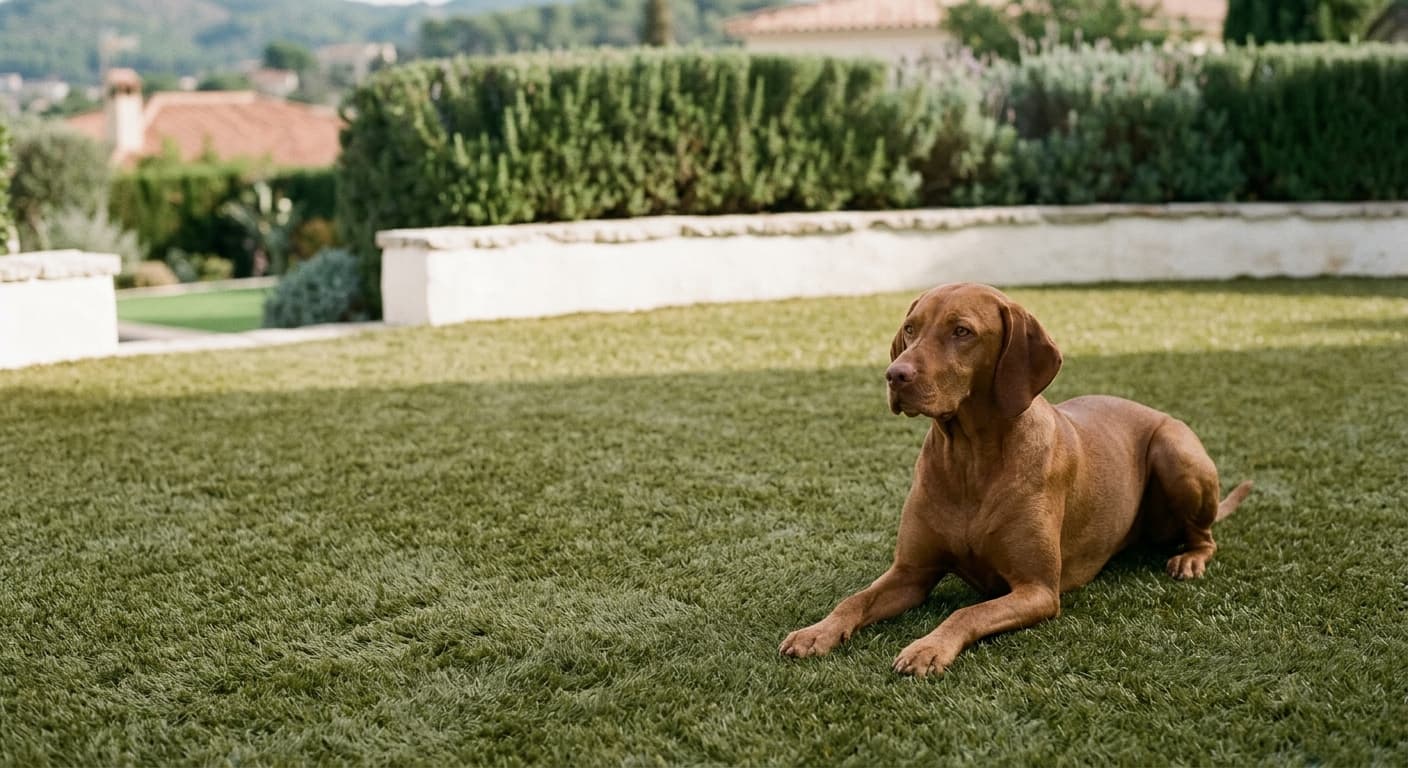
El olor casi nunca viene del césped: viene de lo que hay debajo. Cómo averiguar qué falla, la rutina que lo mantiene limpio y los productos que arruinan la base.
30 July 2026 · 4 min read
A cat doesn't put grass through the same wear as a dog: it doesn't run around with sudden stops or usually dig until it lifts the edge. What it does do is lie in the sun, sharpen its claws wherever it can and, sometimes, use a soft surface as a litter tray. That's why the finish of edges and joins, the feel, and how odour is cleaned matter most here. And since many cats live in flats, the usual spot is the terrace or balcony.
Models
2
Pile height
30–35 mm
Guarantee
up to 10 years
A claw slides over fibre that's well anchored to the backing, but a persistent cat will lift a loose edge or a poorly glued join. That's where care needs to go in during installation.
A cat's urine is more concentrated than a dog's, and the odour shows sooner. High drainage is needed, along with rinsing the area it uses with water and an enzymatic cleaner.
A cat spends more time lying down than running around. A soft, medium-height fibre is more comfortable for it than a short, stiff one.
On hard flooring, rainwater and cleaning water still need to reach the drain. Never block the drain or seal the perimeter completely.
2 products
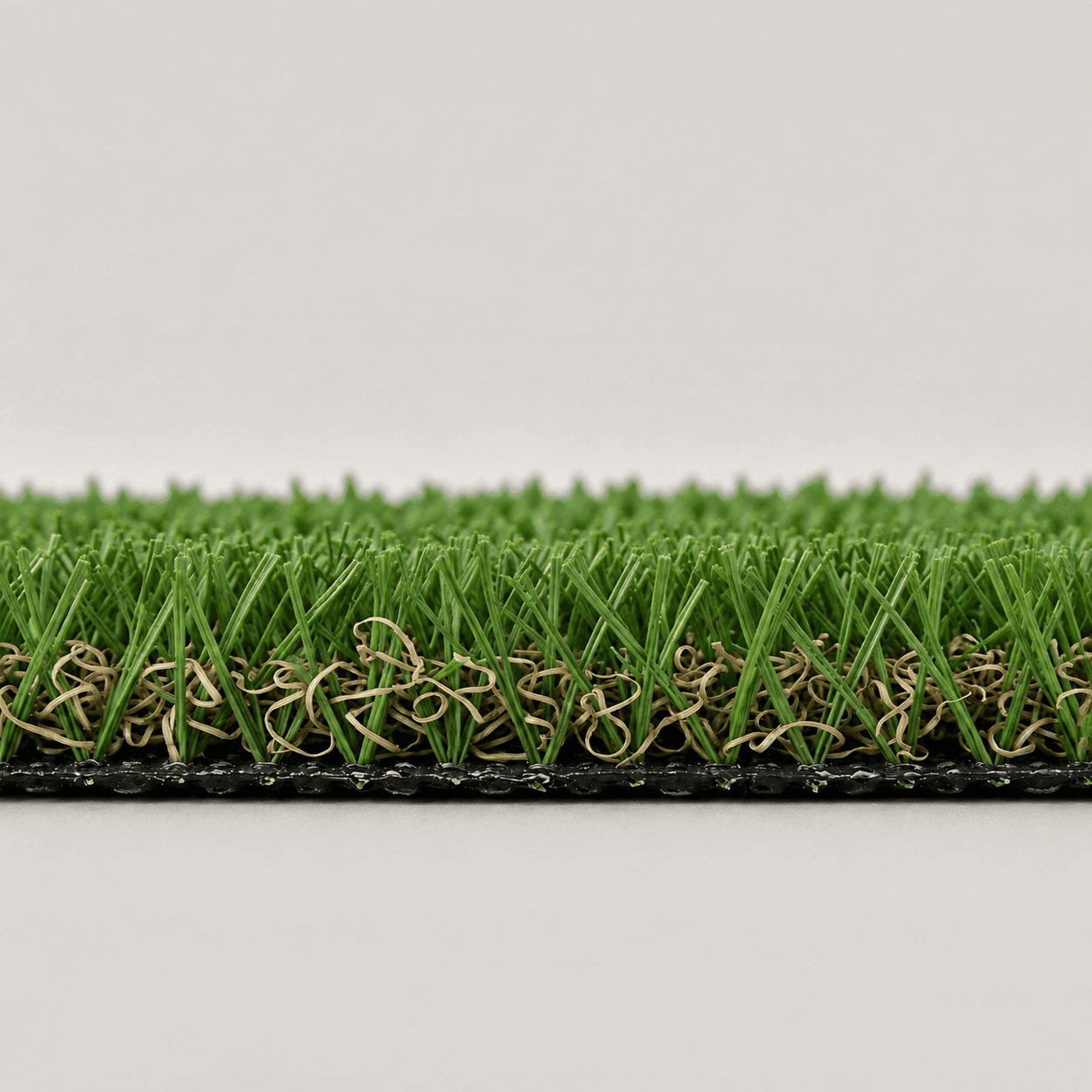
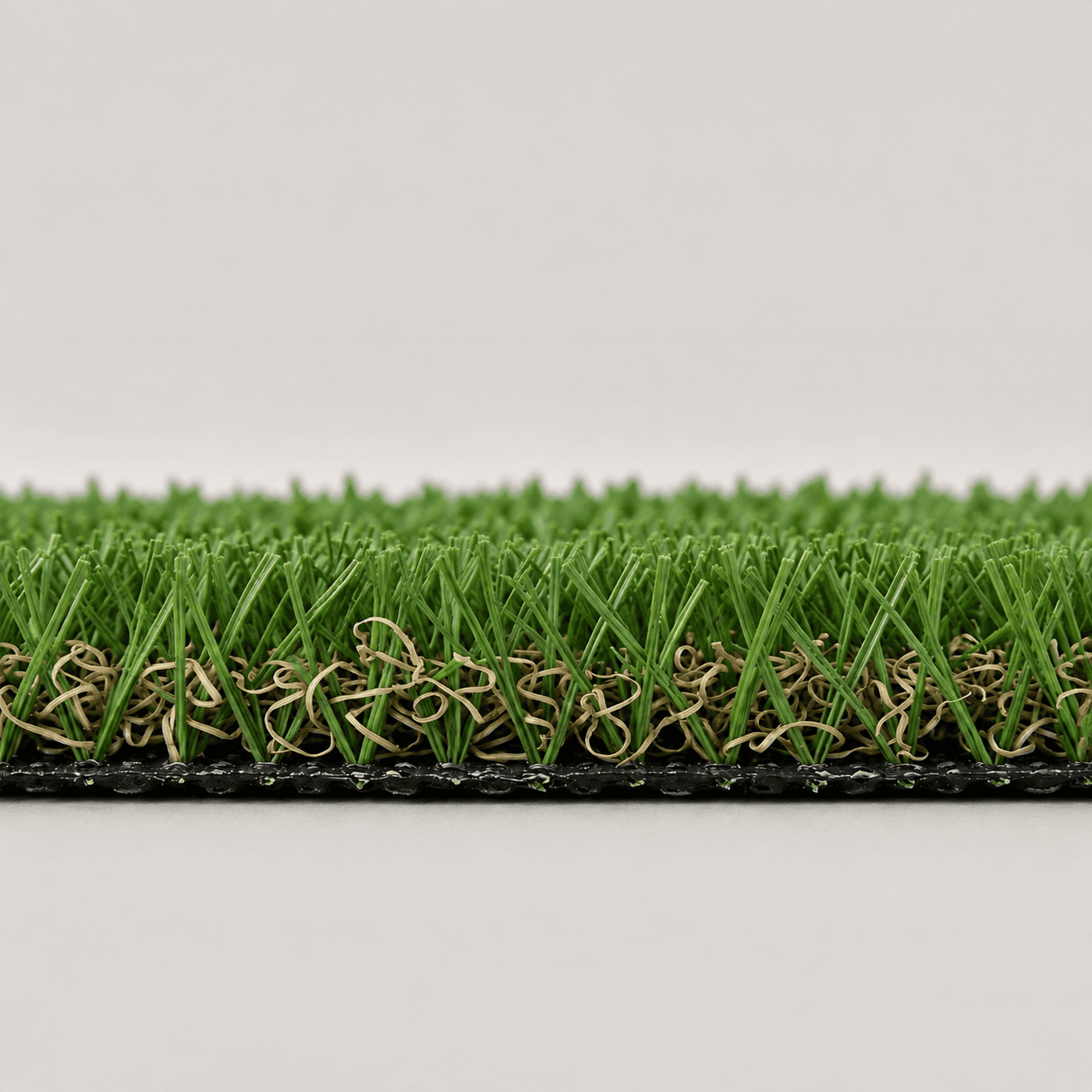
Cada fibra de este césped ha sido cuidadosamente diseñada para proporcionar una suavidad excepcional, imitando la sensación de la hierba natural al ser un césped MULTIDIRECCIONAL.
Combinación perfecta de recuperación y suavidad. Césped excepcional, gracias a la tecnología avanzada del hilo RPLUS-SUPERIOR. Con tres tonalidades de verde, este césped es ideal para todo tipo de jardines. Ya sea en un entorno residencial o comercial, ofrece una estética atractiva y un rendimiento duradero.